

Fractional CFO and Finance Leadership: Startup Budget vs. Forecast Process
Key Takeaways
- A startup budget and a rolling forecast should do different jobs: the budget sets the board-approved annual plan, and the forecast updates the real operating path as conditions change.
- The rolling forecast needs a monthly cadence, plus immediate refreshes after revenue slips, sales cycles lengthen, pricing changes, headcount timing moves, or a raise comes into view.
- A fractional CFO turns budget, forecast, and actuals into one reporting spine so founders can manage runway, pace hiring, and walk into board meetings with numbers that hold together.
Most founders treat their budget and forecast as the same document. That one habit quietly burns runway, stalls hiring decisions, and leaves boards asking questions you can't answer cleanly. Research backs this up: traditional annual budgets were never built for fast-moving environments where revenue targets shift, sales cycles stretch, and headcount plans change mid-quarter. The fix is using each tool for what it was built to do.
The budget is your operating commitment to the board for the year. The rolling forecast is your live view of whether that commitment is still achievable. They answer different questions for different audiences. The moment you make one document do both jobs, you lose control of both. That is the discipline a FinUp Partners fractional CFO builds into your process: using the budget to anchor the board conversation and the forecast to drive internal decisions, connecting both to runway, hiring pace, and investor readiness.

Startup Budget Vs. Rolling Forecast in the Annual Plan
In an annual operating plan, these two tools serve completely different purposes, and mixing them is where operating discipline breaks down. The budget locks in your annual intent. The forecast keeps your real plan current. Here is how they differ in practice.
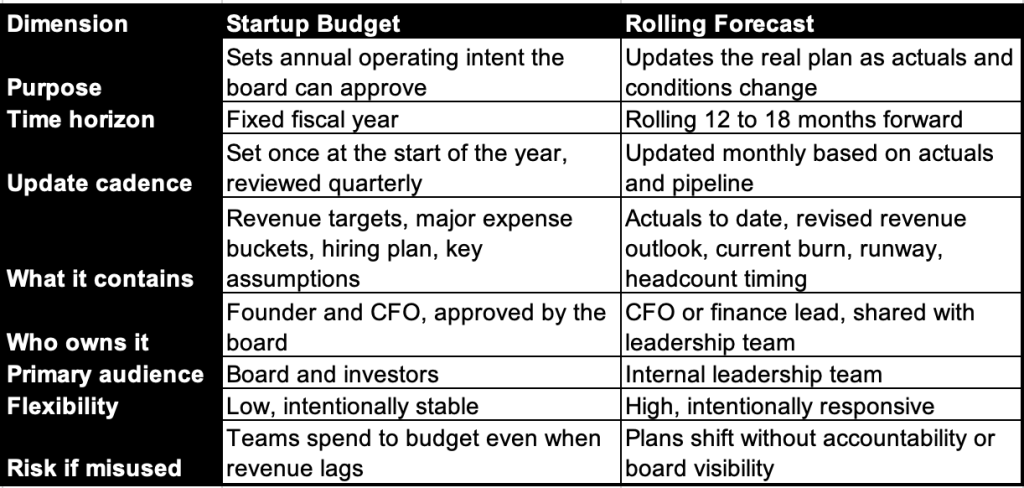
When founders blur the two, one of two things happens. Teams anchor to stale budget numbers and keep spending even as revenue slips. Or they quietly revise the plan without board visibility, which is exactly the kind of control problem that surfaces in investor due diligence. Either way, you walk into your next raise without a clean story to tell.
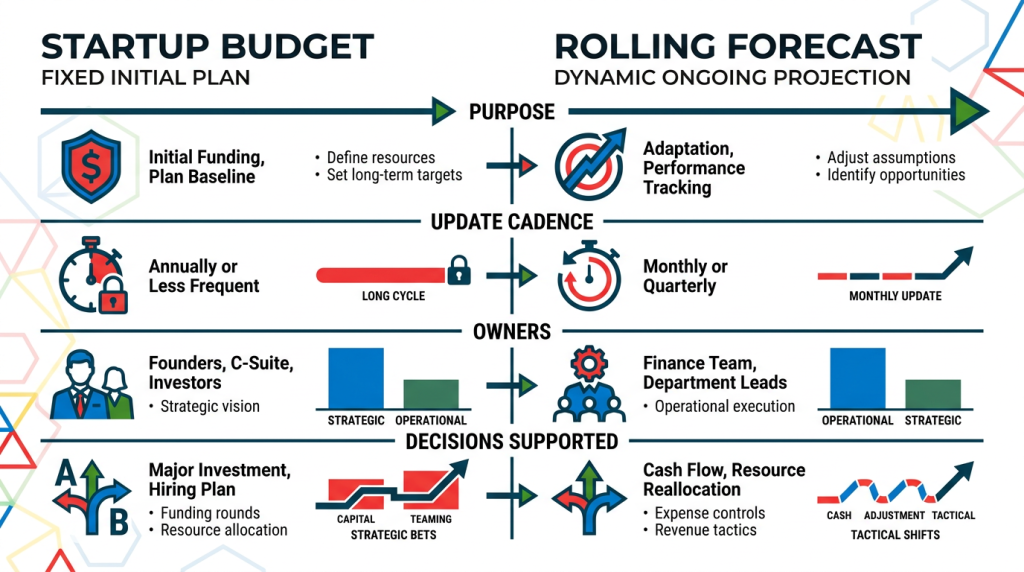
When to Update the Rolling Forecast to Protect Runway
Monthly. That is the answer. Not quarterly, not after the board meeting, and not when something already feels wrong. By the time cash pressure shows up in a quarterly review, hiring is often already committed and spending is already out the door.
The rolling forecast should update every month based on what actually happened: revenue booked, deals that slipped, hires that came in late, and expenses that landed differently than planned. But beyond the regular cadence, there are specific moments that call for an immediate refresh.
- Revenue slips below plan. Even one month of underperformance changes your burn rate math. Recalculate runway immediately so you know what you are actually working with.
- Sales cycles start stretching. Longer cycles mean cash comes in later than the forecast assumed. That gap compounds quickly when you are still spending at the original pace.
- Pricing shifts or a deal structure changes. Both affect gross margin and recognized revenue timing, which flow straight into cash position and burn rate.
- A key hire gets delayed or accelerated. Headcount is usually your largest expense. Any movement on the hiring plan should trigger a forecast update, not a note for next month's review.
- You are within 12 months of needing to raise. Fundraising timelines are longer than most founders expect. The forecast needs to be current so you can show investors a credible runway picture when conversations start.
The output that matters from monthly updates is a clear read on three questions: how many months of cash you have left at current burn, what hiring pace the business can actually support right now, and what tradeoffs leadership needs to decide before the next commitment is made. When the forecast answers those three questions consistently, it drives decisions instead of just reporting them.
How a Fractional CFO Builds Board-Ready Budget and Forecast Reporting
Most founders walk into a board meeting with three different files that don't quite agree with each other. A fractional CFO fixes that before it becomes a credibility problem.
One Reporting Spine, Not Three Conflicting Files
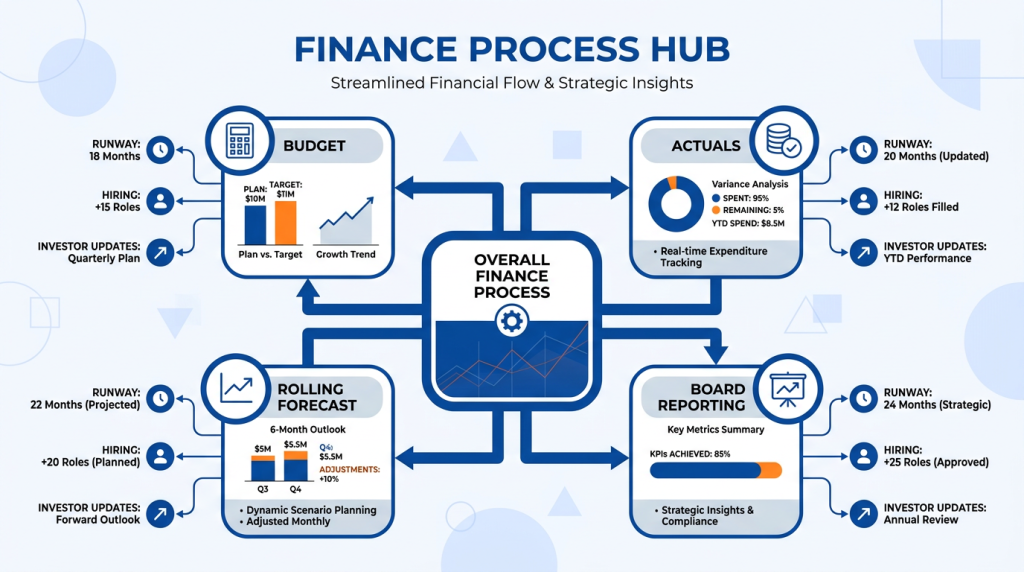
The first thing a fractional CFO does is connect the budget, the rolling forecast, and actuals into a single reporting structure. According to Burkland Associates, anchoring board reporting to the original financial plan with clear budget-versus-actuals discipline is a foundational best practice for early-stage startups. When everything runs from one spine, founders explain variance confidently instead of defending conflicting numbers.
Metrics That Investors Actually Use to Judge Control
Board-ready reporting ties every number to an operating driver. Heavybit's board reporting guidance emphasizes connecting financial results to the business metrics behind them, bookings, gross margin, burn rate, runway, and planned headcount. Those are the signals investors use to assess whether leadership has real control of the business, not just a polished deck.
Discipline That Does Not Slow the Team Down
The right finance leader adds structure without adding bureaucracy. In practice, that means setting a monthly close cadence, assigning clear owners for each data input, and defining the thresholds that trigger a plan change. SVB's forecasting framework reinforces this: driver-based models with a regular update rhythm give leadership a live view of cash position without requiring a finance team meeting every time a deal slips. The process runs in the background so the business keeps moving forward.
Startup Budget and Forecast FAQ
These questions surface consistently when founders are navigating a raise, a hiring ramp, or a board with active expectations. Here is what the answers look like in practice.
If the forecast changes every month, does the annual budget still matter?
Yes. The budget is your operating commitment for the year. It sets revenue targets, expense guardrails, and the hiring plan your board approved. The rolling forecast updates your view of how you get there. One holds the intent; the other tracks the real path.
How far out should a startup rolling forecast extend for hiring and fundraising decisions?
At minimum, 12 months. If you are within 18 months of a raise, extend it further. Investors want to see a credible runway picture, and hiring decisions made today affect cash six to nine months from now. Shorter windows leave you reacting instead of planning.
When is it time to bring in a fractional CFO instead of managing the process alone or with a controller?
When financial decisions start carrying real consequences, such as a fundraise, a hiring ramp, or a board with active expectations, a controller alone is not enough. A fractional CFO owns the strategy behind the numbers. You can explore what that engagement looks like through FinUp Partners' C-Suite Services page.
What is the most common mistake founders make with their forecast?
Treating it as a one-time build rather than a living tool. A forecast that has not been updated in 60 days is not a forecast; it is a history lesson. The companies that manage runway well refresh it monthly and use it to drive decisions, not just report results.
Where can I find templates to get started with budgeting and forecasting?
FinUp Partners maintains a library of finance tools and practical guides through its Resources & Insights hub. You will find downloadable models and articles built specifically for high-growth startups, so you are not starting from a blank spreadsheet.

Use Both Tools, Then Put a Fractional CFO in Charge of the Process
Running both tools well is a discipline problem, not a spreadsheet problem. Startups that blur the two lose accountability when it matters most, usually heading into a raise. Those that neglect one lose the visibility to make hiring and cash decisions with any confidence. Getting it right means having someone who owns the process, sets the cadence, and keeps the board picture current when everything is moving at once.
FinUp Partners builds that system for founders, connecting the budget, rolling forecast, board reporting, and runway into one coherent operating model. The result: decisions grounded in real numbers, investors who see you are in control, and a finance function that moves at the same speed your business does.
Ready to build a budget and forecast process that works for your stage? Explore FinUp Partners' Fractional CFO Servicesand see what the right finance leader can do for your next raise.