
How a Fractional COO Can Transform Your Startup's Operations
Author: Carla Anderson Skogland, Founder & Partner - FinUp Partners
Key Takeaways
- A fractional COO helps a startup move from founder-dependent firefighting to repeatable execution by clarifying ownership, tightening handoffs, and building an operating cadence the team can run without constant intervention.
- The right time to bring in operational leadership is before a fundraise, launch, or expansion exposes the cracks, especially when revenue is growing, delivery is slipping, and too many decisions still depend on the founder.
- For startups that need the function but not a full-time hire, the fractional model delivers embedded senior execution, board-ready reporting, and measurable operational wins without the cost and commitment of adding a permanent COO too early.

You're closing deals, the product is working, and the team is growing. But somehow, everything still runs through you. Every cross-team decision, every delivery hiccup, every "who owns this?" moment lands on your desk. That's not a people problem. That's what happens when a company outgrows its operating system before it builds a new one. And it's more common than most founders admit. Harvard Business Review calls this the core reason fractional C-suite talent is becoming mainstream: founders need senior operating leadership, just not always the full-time version.
A fractional COO steps into that gap. They bring the structure, the operating rhythm, and the cross-functional accountability your business needs right now, without the overhead of a full-time executive hire. At FinUp Partners, we work with founders who are scaling fast but firefighting daily, helping them build operations that run on repeatable systems rather than heroics.
What I Actually Do as a Fractional COO for a Startup
Most founders ask what a fractional COO actually does day-to-day. The honest answer is: I step into the leadership gap and make execution stick. I am not a consultant who hands over a report and disappears. I work inside the business, sit in the hard meetings, and own outcomes alongside your team.
I Start by Clarifying Who Owns What
Confusion about ownership is usually the first thing slowing a startup down. Before building anything new, I map out where decisions stall and where handoffs break. According to HBR's research on the COO role, the most effective operators focus first on clarifying responsibilities and building trust across functions. That groundwork makes everything else faster.
I Build an Operating Cadence Your Team Can Actually Use
Once ownership is clear, I put a working rhythm in place. Weekly check-ins, cross-functional syncs, and simple scorecards that track what matters. HashiCorp's operating model is a good example of this in practice: regular rituals, a shared source of truth, and metrics that move from lagging indicators to leading ones over time. The goal is a cadence founders can run without me in every room.
I Help You Tell a More Credible Story to Investors
If a fundraise is on the horizon, scattered updates and informal reporting will cost you credibility fast. I help convert what you already know about your business into board-ready reporting, cleaner planning cycles, and a sharper narrative about how operations scale. As Forbes notes, the best COOs tailor their priorities to the moment, and for a pre-raise startup, that moment demands structure investors can trust.
When I Tell Founders It Is Time to Hire a Fractional COO
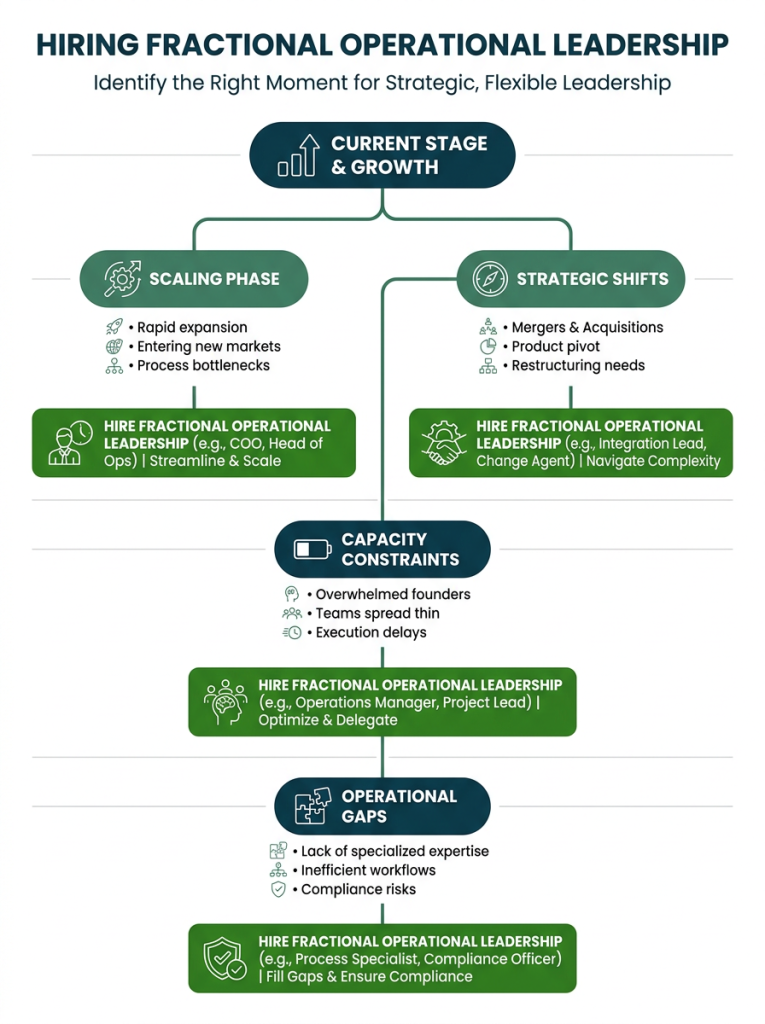
Most founders I talk to already know something is off. They just can't name it yet. Here are the signals I look for when I'm deciding whether a startup needs fractional COO-level help right now.
- Revenue is growing, but delivery keeps breaking. If you're closing deals but onboarding is messy, churn is creeping up, or cross-team handoffs constantly drop the ball, that's not a people problem. It's an operating system problem, and adding headcount without fixing the system only makes it worse.
- Every decision still routes through you. When the founder becomes the bottleneck for approvals, priorities, and problem-solving, the company has outgrown founder-led coordination. As Aaron Levie found at Box, bringing in operational leadership specifically to absorb that decision load was what allowed the business to scale without the CEO becoming the ceiling.
- A fundraise, launch, or expansion is coming fast. This is the one founders most often get wrong. They wait until they're already under pressure, then try to fix operations and close a round at the same time. Bringing in a fractional COO before the strain peaks is almost always cheaper than cleaning up the mistakes that happen when you don't. Stripe's former COO makes the same point: fast-growth companies that pause to align structure and decentralize decisions before scaling fare significantly better than those that reactively patch things mid-sprint.
- You're not ready for a full-time COO, but you need the function now. The fractional model is built exactly for this gap. You get senior operating leadership on a flexible engagement, not a full-time salary and a two-year commitment.
If two or more of these resonate, the timing is probably right. Waiting rarely makes it easier.
How I Help Improve Operations and Scale Growth Without Adding Bureaucracy
Here's what the work actually looks like. Make the right things visible. Build a rhythm the team can sustain. Give the founder their time back. Three things, done in that order, and the sequence matters.
Win One: Visibility
Most teams don't fail because people aren't working hard. They fail because no one can see where work breaks down. Research from Harvard Business School shows that making processes visible to employees improves morale, accountability, and perceived value. I start there. Once your team can see bottlenecks, missed handoffs, and unclear ownership, performance stops feeling random and starts feeling fixable.
Win Two: Rhythm
Visibility alone doesn't scale a company. You need a consistent operating cadence that keeps product, go-to-market, and delivery moving together. A well-designed operating rhythm works across three layers: strategic, operational, and tactical. I introduce just enough structure at each layer to drive accountability and forecast capacity without layering on meetings and process for its own sake. The goal is a system your team actually uses, not one that creates more overhead.
Win Three: Founder Leverage
When visibility and rhythm are in place, something shifts for the founder. Decisions stop routing through you by default. The team can resolve problems without waiting on your input. That's when you get your time back for the things that actually move the business forward: customer relationships, fundraising conversations, and long-term strategy. Investors notice the difference too. A company that runs without constant founder intervention tells a far more credible scaling story.
Why I Recommend a Fractional COO Before You Commit to a Full-Time Hire
Most founders make the same two mistakes in sequence: they wait too long to get operational leadership in place, then hire too fast when the pain peaks. The result is either a business that scales badly or a full-time executive hired for a role that was defined in crisis mode. There's a smarter path.
The fractional model puts a senior operator in the seat now, with scope and cost matched to where your business actually is. At FinUp Partners, we structure every engagement the same way: define the outcomes first, then size the work around them.
Here's what that looks like in practice:
- Get senior execution without full-time overhead. A fractional COO engagement typically runs 4 to 12 days per month, meaning you access real operator experience without carrying a six-figure salary before the business is ready for it.
- Repair your operating system before it costs you a deal. Broken handoffs, unclear ownership, and missing reporting cadences are fixable. They just need someone who's fixed them before to step in and lead the work, not just recommend it.
- De-risk the full-time hire you'll eventually make. As First Round's fractional hiring guide points out, working with a fractional executive first gives you a clear picture of what the full-time role actually needs to look like, so when you're ready to hire, you hire right.
- Move from reactive to predictable in 90 days. At FinUp Partners, we define success at the start of every engagement and track it week over week. Most founders see their first meaningful operational wins in four to six weeks.
- Keep your founder leverage intact. When your business stops depending on your constant intervention, you get your time back for the things only you can do: customers, strategy, and the fundraise you're building toward.
If your revenue is growing but your operations feel like they're held together with tape and goodwill, that's the signal. You don't need a full-time COO yet. You need a proven operator who can install the structure, accountability, and cross-functional rhythm that make growth repeatable.
FinUp Partners' Fractional COO Services are built for exactly this moment. Reach out to FinUp Partners to find out what the right engagement looks like for your business.

Fractional COO FAQs: Answers to What Founders Ask Before Taking the Leap
The question I hear most from founders is whether a fractional COO will have enough context to actually lead. The honest answer is yes, and quickly. Experienced fractional operators are built to ramp fast, often delivering measurable results within the first 30 to 90 days. This is not a consulting engagement where someone hands over a slide deck and disappears. I attend leadership meetings, manage cross-functional priorities, and own accountability for execution as a fully integrated member of your team.
Founders also ask about cost, commitment, and trust. A fractional COO typically engages 4 to 12 days per month, keeping scope tight to where your startup actually is. Research from HBR confirms that this flexibility is one of the model's biggest structural advantages: scale involvement up or down as milestones shift, without locking in a full-time commitment before the business is ready for it. On confidentiality, a credible fractional COO operates under formal agreements and joins your leadership team on record, visible to investors, board, and staff.
But the question most founders forget to ask is the most important one: what does waiting cost? Every month without operational structure is another month of decisions routing through you, delivery that frays under growth pressure, and a fundraising story that is harder to tell with confidence. The fractional model closes that gap fast, on your terms.