

How a Fractional COO for Startups Can Transform Your Operations
Author: Carla Anderson Skogland

Key Takeaways:
- Fractional COOs rapidly transform startup operations by building scalable systems, establishing operating rhythms, and converting strategy into reliable execution—without the cost or commitment of a full-time hire.
- Startups benefit from flexible, on-demand access to proven Fortune 100 operators who deliver measurable improvements in delivery consistency, cross-functional alignment, and investor-ready reporting within 90 days.
- A fractional COO engagement allows founders to overcome operational chaos, preserve cash, and scale leadership involvement up or down as needed—making it an ideal solution during high-growth or transitional phases.
You can close deals, but your team misses ship dates three cycles in a row. Customer churn spikes after onboarding because handoffs break down. According to startup operators, fractional executives help companies convert demand into reliable delivery without the cost of full-time hires.
Here's what works in practice. A fractional COO for startups builds operating rhythm where bottlenecks once slowed progress. They convert your strategy into repeatable execution with clear accountability and cross-functional coordination. FinUp Partners deploys real operators with Fortune 100 experience who implement proven systems at startup speed.
Ready to build predictable operations that scale? FinUp Partners can help you implement the operating rhythm your startup needs.
What a Fractional COO Actually Does in a Startup
If you're constantly firefighting delivery issues while trying to scale, a fractional COO stops the chaos and builds predictable operations. What does a fractional COO do for a startup? They convert strategy into consistent execution, helping you avoid costly missteps that derail growth or burn investor confidence.
Establishes Operating Cadence
A fractional COO creates a weekly leadership rhythm that keeps everyone aligned. They implement structured handoffs between teams and establish a single source of truth for metrics. This means no more guessing what's working or where bottlenecks hide. Research shows early systems create the accountability and execution rhythm that scale. Your team stops waiting for direction, and starts delivering consistently.
Converts Goals Into Cross-Functional Execution
Most founders can set quarterly goals. The challenge is making them happen across teams. Once that rhythm is established, your fractional COO translates OKRs into detailed work plans with specific owners and deadlines. They remove blockers before they slow progress. Harvard Business Review emphasizes that effective OKRs work at the team level, not individual level. Every department knows their role in hitting company targets.
Prepares Investor-Ready Operations
Investors want proof you can execute, not just sell. A fractional COO develops board-quality reporting and aligns forecasting with your finance team. They create evidence of predictable delivery that builds fundraising confidence and prevents costly operational missteps. McKinsey research shows that COOs who focus on translating strategy into delivered results drive measurable business outcomes. This is exactly what FinUp Partners' fractional COOs deliver, using proven systems and frameworks in the first 90 days.
Signals It's Time to Hire a Fractional COO
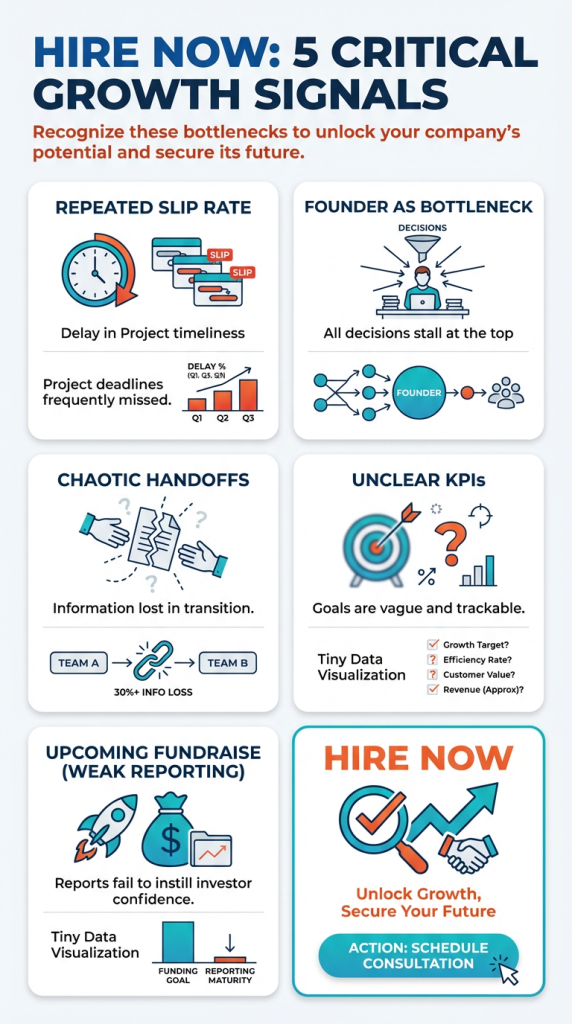
When should a startup consider hiring a fractional COO? The answer usually becomes obvious when operational pain starts costing you deals, talent, or investor confidence. Here are the clearest warning signs that it's time to bring in operational leadership.
- Delivery dates slip consistently - Missing ship dates three cycles in a row or seeing customer churn spike after onboarding due to poor handoffs.
- You've become the bottleneck - More than half your team waits on you for approvals, priorities, or decisions that slow down daily work.
- Cross-functional misalignment creates gaps - Sales promises features the product hasn't built, or customer success lacks access to delivery data from engineering teams.
- Fundraising pressure mounts - Investors expect board-ready metrics, cohesive forecasting, and proof of operational discipline within 90 days.
- Key metrics trend downward - NPS drops due to delivery failures, or operational inefficiencies start eating into unit economics.
These patterns signal what Harvard Business Review calls the need for a "second in command" to convert strategy into repeatable systems. Index Ventures research shows that operational complexity often outpaces founder bandwidth during growth phases. If these patterns sound familiar, you need operational leadership that can build structure without bureaucracy. The question becomes whether to hire full-time or bring in fractional expertise that scales with your needs.
Fractional COO vs Full-Time COO: Cost, Speed, and Impact
When you're scaling fast and preparing for a fundraising round, choosing between fractional and full-time leadership can make or break your timeline and budget. Here's how the benefits of a fractional COO versus a full-time COO for startups compare across the dimensions that matter most for founders facing growth pressure.
Cost (Cash + Equity)
- Fractional COO: $8K–25K/month retainer, no equity required
- Full-Time COO: $200K–400K annual salary + 0.5–2% equity
- Implication: Fractional saves 60–80% in Year 1 costs
Speed to Impact
- Fractional COO: 2–4 weeks to start, systems live in 30 days
- Full-Time COO: 3–6 months to hire + 90 days to ramp
- Implication: Fractional delivers results 4x faster
Scope Flexibility
- Fractional COO: Scale 10–40 hours/month based on needs
- Full-Time COO: Fixed commitment regardless of workload
- Implication: Pay only for what you need, when you need it
Operator Bench Depth
- Fractional COO: Access to proven executives from Amazon, Microsoft, Disney
- Full-Time COO: Limited to single hire's experience
- Implication: Tap 140+ years of combined leadership experience
Commitment/Risk
- Fractional COO: Month-to-month, easy exit
- Full-Time COO: 12–24 month commitment + severance risk
- Implication: Lower financial and cultural risk
On-Ramp/Off-Ramp
- Fractional COO: Start next week, scale up/down instantly
- Full-Time COO: 90-day termination notice requirements, complex transitions
- Implication: Maximum agility for changing needs
90-Day Outcomes
- Fractional COO: Operating rhythm, KPI dashboards, process docs
- Full-Time COO: Still learning company culture and systems
- Implication: Immediate measurable improvements
The data from recent startup compensation trends shows companies are increasingly choosing flexible leadership models to preserve cash while accessing senior talent. A fractional approach lets you prove operational improvements before committing to a full-time executive hire.
Fractional COO for Startups: FAQs
When your startup can sell but struggles with reliable delivery, or when you're preparing for a fundraise without board-ready operational metrics, these fractional COO for startups FAQs address the specific concerns founders face about bringing in senior operational leadership.
How can a fractional COO help my startup scale faster?
A fractional COO eliminates specific bottlenecks like founders becoming approval gatekeepers, teams waiting days for priority clarification, and departments working in silos. They build handoff systems between sales and delivery, establish decision rights, and create executive rhythms that keep work flowing without heroics.
What does engagement look like in the first 30, 60, and 90 days?
Days 1-30 focus on assessment and quick wins—identifying workflow gaps and establishing management cadence. Days 31-60 involve implementing process improvements and cross-team coordination systems. By day 90, you have reliable operating rhythms, board-ready KPI tracking, and measurable delivery improvements.
How is scope defined alongside a fractional CFO or CTO?
The COO owns cross-functional execution while the CFO handles financial planning and the CTO manages technical architecture. Clear boundaries prevent creating overlap—the COO ensures teams hit delivery targets that the CFO forecasts and the CTO builds. Executive alignment sessions keep everyone coordinated without duplicating efforts.
What results should I expect by day 90?
Expect measurable improvements in delivery consistency, reduced founder bottlenecks, and investor-ready operational reporting. Research shows that interim leadership outcomes depend heavily on clear governance and defined success metrics. Our fractional COO services establish specific KPIs upfront rather than leaving results to chance.
How do you protect culture while adding structure?
Structure supports culture by reducing chaos and firefighting that burns out teams. We implement lightweight processes that match your pace—management check-ins instead of daily standups, clear decision rights instead of approval layers. The goal is consistent execution that preserves your startup's speed and flexibility.
What if we need to scale involvement up or down quickly?
Fractional engagements flex with your needs. Start with 2-3 days per month for process setup, then scale to embedded leadership during fundraising or product launches. Industry data shows companies increasingly use flexible executive arrangements to match resource needs with growth phases—exactly what fractional models enable.
Scale Smarter With a Fractional COO
When you can sell, but delivery lacks consistency, the issue often stems from execution breakdowns rather than market problems. Research shows that 78% of startups fail to scale successfully due to process challenges. Fractional COO services bridge this gap by building operating rhythms, removing bottlenecks, and creating accountability systems that drive predictable growth.
FinUp Partners deploys real operators who implement workflow refinement and cross-functional alignment without adding bureaucracy. This approach works best when you have demand but delivery lacks consistency, or when you need board-ready reporting and 90-day proof points before your next fundraising round. The growing trend toward fractional leadership reflects founders' need for experienced guidance at startup speed and flexibility.
Ready to convert delivery challenges into reliable systems? Get started with FinUp Partners fractional COO services today.