
How to Prepare a Data Room for Startup Acquisition (and Avoid Deal-Killing Errors)
Author: Carla Anderson Skogland, Founder & Partner - FinUp Partners

Most M&A deals that stall during diligence fail because founders upload messy, incomplete data rooms that spook buyers and trigger valuation haircuts. The deals that close faster and at higher multiples prepare data room for startup acquisition with the discipline of seasoned operators. Here's the difference: winners start with a buyer-ready checklist, lock down security from day one, and stage disclosures to control the narrative instead of reacting to buyer demands.
The problem is timing. Most founders wait until a buyer shows interest to hastily compile financial statements, contracts, and compliance docs. That approach burns weeks, creates gaps that buyers exploit, and signals operational weakness when you need to project strength. FinUp Partnershas guided dozens of startups through this exact process, bringing fractional CFO leadership to get your data room buyer-ready without the overhead of a full-time hire. We know what buyers actually request, how to sequence disclosures to build confidence, and which privacy safeguards protect your most sensitive information until late-stage diligence.
Ready to compress your diligence timeline and protect your valuation? FinUp Partners delivers the fractional CFO expertise to build a disciplined, staged data room that keeps buyers moving toward close.
What "Buyer-Ready" Looks Like (Before You Invite Anyone In)
Smart founders build their data room on a 16-week timeline for data room preparation, working backwards from when they expect buyer interest. Start with your prioritizing core documents first - financials, cap table, key contracts - then expand by functional area once the foundation is solid. Stage your disclosures by risk tier, keeping sensitive items like detailed customer lists or competitive intelligence for later rounds of diligence when buyer commitment is higher.
Beyond timing, organizational discipline makes or breaks your preparation. Create a single source of truth before any buyer gets access. Avoid the confusion of parallel folders, email attachments, and version confusion that kills deal momentum. Assign one accountable owner per workstream (finance, legal, people, commercial) with clear SLAs for document updates and structured buyer responses. Weekly stand-ups keep everyone aligned and prevent last-minute scrambles when buyers start asking hard questions.
Finalize Your Diligence Checklist - Then Work It Relentlessly
Most founders jump straight into uploading files without a roadmap. That creates chaos when buyers start asking for specific documents and you're scrambling to find them. Start with a proven baseline and manage it with the same discipline you'd use for a product release - clear ownership, hard deadlines, and weekly progress tracking.
- Download a market-standard template and customize for your model. Use YC's checklist as your starting point, then add SaaS-specific items like customer cohort analysis or marketplace-specific supplier agreements. The NVCA templates cover the legal foundation every buyer expects.
- Tag every line item with owner, status, and risk level. Assign one person per document category (finance, legal, people, commercial). Mark each item as green (ready), yellow (in progress), or red (missing/problematic). Flag high-risk items that could stall the deal.
- Run weekly stand-ups until everything turns green. Treat this like a sprint - 15-minute check-ins with each workstream owner. Address blockers immediately and escalate red items to leadership. Buyers move fast, and missing documents slow everything down.
- Aim for completeness, not perfection. Plan for around 37 core documents minimum, but don't stuff the room with every email thread. Buyers value accurate, well-organized information over massive file dumps. Use Cooley's sample to validate your scope.
- Lock your checklist before you start uploading. Once you begin populating folders, resist the urge to keep adding "nice to have" documents. Scope creep kills timelines and creates version control nightmares.
Structure the Folder Tree So Buyers Find Truth in Three Clicks
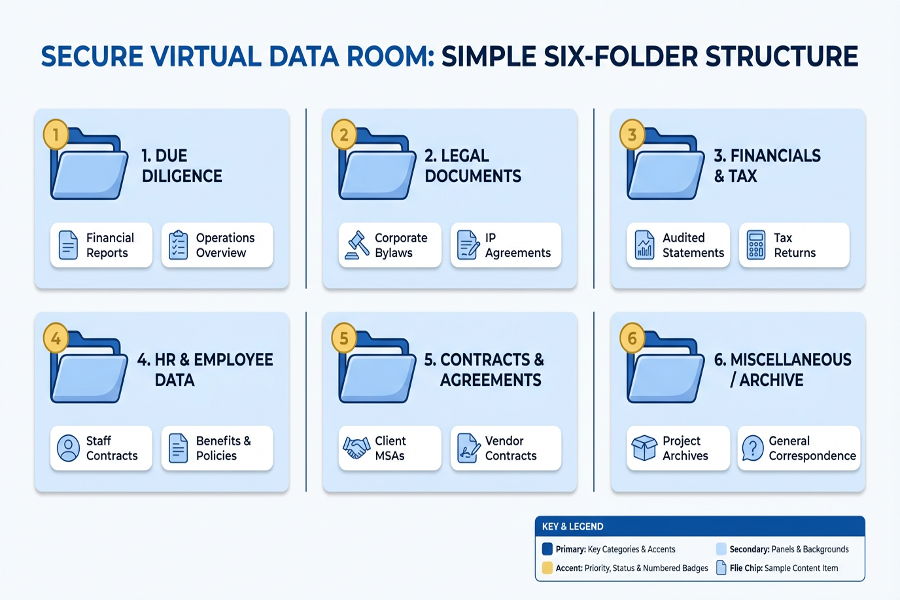
Smart data room organization starts with a shallow, predictable hierarchy that mirrors how buyers think about risk. Use six numbered folders: 01 Corporate, 02 Finance, 03 People, 04 Commercial, 05 Product/IP, 06 Compliance. This structure matches what investment teams expect during diligence and prevents buyers from hunting through nested subfolders. Keep it simple, buyers want to find your cap table, customer contracts, and financial statements without clicking through multiple layers.
Once your folder structure is set, file naming determines the success of your data room organization. Name every document with version, date, and owner: "CapTable_v2.3_Dec2024_CFO.xlsx" or "ServiceAgreement_Acme_v1.0_Oct2024_Legal.pdf". Mirror your diligence checklist numbers so buyers can map requests to files instantly. Add a master index PDF at the root level and maintain a visible change log that tracks what's new or updated. This systematic approach eliminates confusion and shows buyers you run a disciplined operation - exactly what they want to see in a potential acquisition target.
Gate Access With NDAs That Actually Protect You
Before you invite a single buyer into your data room, lock down access with confidentiality agreements that actually hold up under pressure. Standard NDAs from five years ago won't cut it anymore - you need modern data room security protections that account for AI tools, data extraction, and the reality that buyers will have multiple team members examining your most sensitive information.
- Start with mutual NDAs that include non-solicit clauses. Protect your team from poaching attempts and ensure both sides have skin in the game - mutual agreements create better behavior than one-way restrictions.
- Explicitly prohibit AI and machine learning use of your data. Add language that prevents feeding your confidential information into ChatGPT, Claude, or any LLM training - AI clauses are becoming standard NDA best practices for good reason.
- Require individual click-through acknowledgments for every user. Don't rely on blanket coverage - make each person on the buyer's team personally accept terms and auto-expire their access when diligence ends.
- Set document-level controls based on sensitivity. Use watermarking with user email and timestamps, disable downloads for your most sensitive files, and restrict printing until you reach late-stage diligence.
- Include specific restrictions on data extraction and sharing. Prohibit copying information into other systems, sharing with third parties not covered by the NDA, and using your data for competitive analysis.
- Build in automatic termination triggers. Set clear end dates tied to deal milestones - if talks stall or the buyer walks away, access should automatically shut off without you having to chase people down.
Upload Audit-Ready Financials - No Excel Gymnastics Needed
Buyers expect clean, GAAP-aligned monthly financial statements for acquisition spanning 24 to 36 months. Include your income statement, balance sheet, and cash flow statement. Add SaaS-specific metrics like ARR cohorts and CAC payback periods. Export directly from your ERP or general ledger rather than building complex spreadsheet models. Create a reconciliation pack that ties every line item back to your source system so buyers can verify numbers in one pass instead of tracking down discrepancies.
Lock in a "data as of" date before opening the room and stick to it religiously. Mid-cycle restatements during diligence trigger immediate valuation haircuts because they signal weak financial controls. If you discover errors after launch, address them in a separate addendum with clear explanations rather than overwriting historical files. Buyers value consistency over perfection, and a stable financial baseline keeps the deal moving forward.
Prove You Own What You Sell: IP, Code, and Licenses
Buyers want proof you actually own your technology and brand assets. Missing assignments or unclear licensing can torpedo a deal faster than almost any other issue. Here's what works to build complete intellectual property documentation.
- Gather all IP assignments in one place. Collect founder agreements, employee IP assignments, and contractor work-for-hire agreements. Make sure every piece of code, design, or content has a clear ownership trail to your company. Use a comprehensive checklist to catch gaps before buyers do.
- Run an open-source software scan and document everything. Provide a software composition analysis report showing all third-party libraries, their licenses, and compliance status. OSS risks can derail transactions if not properly managed, so include license texts and any required attributions.
- Create a complete patents and trademarks register. List all filed and pending applications with status, jurisdictions, and filing dates. Use the USPTO database to verify trademark registrations and include screenshots of current status pages.
- Flag any pending or disputed IP early. Don't hide ongoing patent applications, trademark oppositions, or licensing disputes. Buyers will find these anyway, and transparency builds trust while giving you control over the narrative.
- Include third-party licensing agreements and restrictions. Document any software licenses, API agreements, or technology partnerships that could affect the buyer's use of your IP post-close. Note any restrictions on transfer or change of control.
Fix Your Cap Table Before the Buyer Does
Start by reconciling every equity instrument against your board resolutions and legal docs. Match each option grant, SAFE conversion, and note conversion to the specific board consent that authorized it. Your fully diluted share count must tie exactly to what your board approved, down to the share. Buyers will run their own cap table math and any discrepancy immediately raises questions about your financial controls and legal compliance.
Create a complete documentation set that includes your equity plan documents, all board consents, recent 409A valuations, and individual option grant receipts. Upload everything to a dedicated cap table folder with clear version control and dating. Then, produce a single, dated "cap truth" PDF that summarizes your current fully diluted ownership with all conversions applied. As due diligence experts note, cap table accuracy issues slow deals more than almost any other factor because they touch valuation, legal structure, and management credibility all at once.
Standardize Customer Contracts and Expose Risks Upfront
Without a full-time legal or finance team, most founders struggle to extract the business metrics buyers actually care about from customer contracts. A systematic customer contracts review saves weeks of diligence chaos and prevents valuation hits when revenue concentration or unusual terms surface unexpectedly.
- Build a contracts register with predictive business metrics: Track ARR, contract term, auto-renewal dates, and churn probability (based on payment delays, support tickets, and contract negotiation difficulty). Buyers want to model your revenue durability, not parse legal language.
- Extract and flag deal-impact terms upfront: Identify change-of-control provisions, termination for convenience rights, most-favored-nation clauses, and SLA penalties with financial exposure. These terms directly affect post-acquisition integration costs and revenue retention.
- Isolate side letters and non-standard agreements Keep special pricing, custom terms, and one-off deals in a separate section with clear business impact notes. Buyers need to distinguish your repeatable sales process from exceptions that won't scale.
- Stage sensitive information by buyer commitment level: Redact customer names, specific pricing, and personal data initially. Share aggregated revenue data and template contracts first, then provide detailed customer information only with serious buyers under stronger NDAs.
- **Leverage contract extraction technology with validation**: Automated tools can pull key terms and dates quickly, but validate outputs manually. M&A practitioners report that technology speeds contract review but requires expert oversight to catch nuanced terms that impact valuation.
- Reconcile contract terms with revenue recognition: Verify that contract language matches how you book revenue in your financials. Misalignment between contracts and accounting treatment creates immediate red flags that trigger deeper buyer scrutiny and delay closing.
Button Up People Docs and Retention Signals
Start with a complete employment documentation package that buyers can verify quickly. Centralize offer letters with IP assignment clauses, confidentiality agreements, and contractor compliance forms in one folder. Include your org chart with reporting lines, key person dependencies, and any retention or change-of-control bonuses tied to the deal close. This employee agreements and retention planning shows buyers you've thought through post-acquisition continuity and cuts integration risk.
Protect sensitive data while giving buyers confidence in your people foundation. Share compensation bands and equity participation rates, but remove SSNs, home addresses, and raw payroll details until later-stage diligence. Include employee policies and any pending HR issues with resolution plans. Smart buyers want to see you've addressed employment law compliance proactively rather than discovering gaps during diligence.
Prove You're Compliant - And Audit-Ready
Acquirers scrutinize compliance documentation because regulatory gaps can trigger post-close liabilities, operational restrictions, or customer churn. Organized compliance documentation shows you operate with discipline and reduces the buyer's risk premium on your valuation.
- Provide current security certifications and privacy program evidence. Document SOC 2 Type 2 reports (not just Type 1), ISO 27001 certificates, and any industry-specific compliance attestations. Potential buyers prefer SOC 2 reports that show operational effectiveness over time, not just point-in-time assessments.
- Upload signed data processing agreements and privacy templates. Include your standard DPA, sub processor agreements, and privacy policy templates that customers actually sign. Use established models like Google's DPA as a reference for the level of detail acquirers expect to see.
- Document security policies with recent audit evidence. Maintain your information security policy, incident response procedures, and any penetration testing reports from the last 18 months. Include remediation notes that show how you addressed findings - the acquiring company wants proof you fix problems, not just find them.
- Centralize tax filings and nexus documentation. Provide federal and state tax returns, sales tax registrations, and nexus analysis for all jurisdictions where you operate. Poor tax compliance can trigger indemnity demands or escrow holdbacks that reduce your net proceeds.
- Include regulatory registrations and licensing documentation Upload business licenses, professional certifications, and any industry-specific registrations (FINRA, healthcare, etc.). Flag renewal dates and any pending applications so potential buyers can plan for continuity.
- Prepare breach and incident response summaries. If you've had security incidents or regulatory inquiries, document them with resolution evidence and process improvements. Transparent disclosure with remediation evidence creates less risk than attempting to hide past issues. FinUp Partners' fractional CFOs help founders organize this type of compliance documentation efficiently, ensuring you're acquisition-ready without the overhead of a full-time hire.
Orchestrate Buyer Q&A to Control the Narrative
Set up a centralized Q&A tracker before buyers start asking questions. Assign each workstream an owner with clear SLAs for responses - finance gets 24 hours, legal gets 48, and product/IP gets 72. Batch your responses 2-3 times per week rather than answering piecemeal. This prevents the constant interruption cycle that derails your team and makes you look reactive. Virtual data rooms include Q&A workflow tools that route questions automatically and track response times.
Answer with documents, not paragraphs of explanation. When buyers ask about revenue recognition policies, link to your accounting manual section rather than writing a custom response. This approach prevents drift between what you say and what your source documents show. Keep a separate "questions of concern" log for anything that signals buyer hesitation - pricing pressure, competitive threats, or regulatory gaps. Unresolved red flags erode trust faster than any other factor in buyer Q&A preparation, so address them head-on or risk watching your deal stall.
Set Granular Permissions - Fewer Eyes, Faster Close
Strategic permission management turns your data room into a controlled disclosure process rather than an open book. The goal is giving buyers what they need to evaluate the deal while protecting sensitive information until the right moment. Here's how to set viewing rights that accelerate diligence without creating security gaps.
- Assign permissions by function and seniority. Give the buyer's finance team entry to financial folders, their legal counsel to contracts and corporate docs, and technical leads to product/IP sections. Senior executives get broader viewing rights only after initial review phases are complete.
- Default to view-only with watermarking for all sensitive documents. Legal experts recommend] strict controls on data entry, including watermarking and limited export capabilities to protect confidential information during M&A processes.
- Cap total buyer-side users at 5-8 people initially. Too many eyes create noise, slow decision-making, and increase leakage risk. Expand permissions only as diligence progresses and you've confirmed serious intent.
- Disable downloads and printing until confirmatory diligence. Virtual data room best practices emphasize governing document distribution to maintain confidentiality and prevent unauthorized sharing during early-stage due diligence.
- Run weekly permission audits and purge stale users. Remove anyone who hasn't logged in for 7+ days or whose role in the process has ended. Keep a clean user list so you know exactly who has seen what.
- Stage sensitive disclosures by deal phase. Customer lists, detailed financials, and key person agreements stay locked until you're past initial interest and into serious negotiations. Manage the narrative by controlling the timeline - this disciplined approach can compress diligence by 2-3 weeks and protect valuation by preventing early exposure of sensitive details.
Lock Versioning Before It Locks You
Version control for documents becomes your lifeline when buyers start asking "which version is current?" Create a read-only "current set" folder that contains only the latest, approved versions of each document. Archive all superseded files in a clearly labeled "prior-versions" folder, organized by date or transaction milestone. This approach prevents buyers from accidentally reviewing outdated contracts or financials that could trigger unnecessary questions. Legal experts recommend maintaining this separation from day one to avoid confusion during diligence.
Embed dates and version numbers directly in your filenames (e.g., "Series-A-Purchase-Agreement_v3_2024-03-15_EXECUTED.pdf") and maintain a visible change log that buyers can scan without digging through folders. Never overwrite executed agreements with drafts or redlines. Upload clean scans of signed documents and keep any working edits in separate files clearly marked as "DRAFT" or "WORKING." This discipline protects you from the nightmare scenario where a buyer discovers discrepancies between what they reviewed and what actually got signed. Due diligence processes move fast, and version confusion can stall deals at closing.
Establish Security Baselines Buyers Trust
Your data room security controls signal professionalism and protect both parties during diligence. Buyers evaluate your security posture as a proxy for how you'll handle their data post-acquisition. Here's what buyers expect to see:
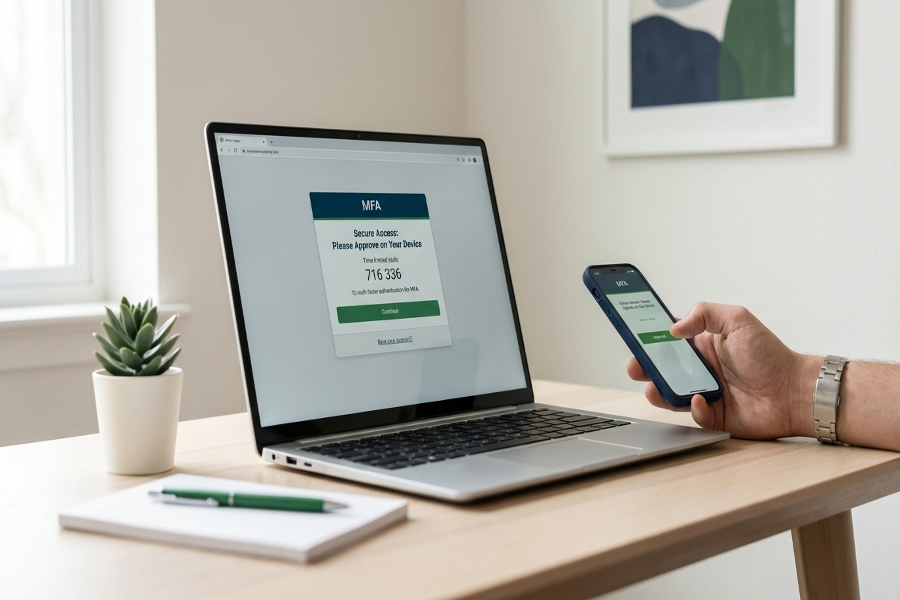
- Require SSO with multi-factor authentication for all buyer access, preferably using phishing-resistant authenticators like hardware tokens or platform authenticators rather than SMS codes.
- Enable detailed audit logging that tracks every document view, download, and user session with timestamps and IP addresses - buyers expect at least six months of audit trail availability for compliance reviews.
- Apply dynamic watermarking to all documents with the viewer's email, timestamp, and company name embedded in the file - this deters unauthorized sharing and creates accountability.
- Implement IP allowlisting and session controls that automatically log out inactive users and restrict access to approved corporate networks during business hours.
- Disable bulk download capabilities until confirmatory diligence begins, forcing buyers to review documents individually and preventing wholesale data extraction.
- Execute a pre-close security audit by exporting all access logs, purging expired user accounts, and archiving the complete audit trail to satisfy data breach protection requirements and post-close obligations.
Get Buyer-Ready - and Stay in Control Through Close
A disciplined data room process shortens diligence by weeks and protects your valuation from surprise haircuts. The difference between a smooth close and a stalled deal often comes down to preparation quality and how well you control the narrative through buyer Q&A.
But executing this process takes experienced financial leadership who understands what buyers actually request and how to stage disclosures strategically. FinUp Partners deploys fractional CFO expertise to get your data room acquisition-ready without the overhead of a full-time hire. We compress timelines, harden your financials, and keep deals on track at startup speed.
Ready to build a data room that closes faster and protects your valuation? Get the fractional CFO support you need from FinUp Partners.
FAQ: Founder Handoffs, Staging, and What Buyers Expect
After building your data room structure and security controls, founders face challenges around timing, disclosure sequencing, and transition planning during M&A diligence. These questions address the practical realities of managing buyer expectations while protecting your position and preparing for post-close success.
How far in advance should a startup begin preparing the data room?
Start building your data room 16-20 weeks before you expect to sign a term sheet. The YC Series A checklist recommends having core documents ready before any serious buyer conversations begin. This timeline lets you fix issues without rushing and negotiate from strength.
What belongs in a founder transition plan for post-close continuity?
Capture key relationships, operational knowledge, and decision-making processes that only you know. Include customer introductions, vendor contacts, and institutional knowledge about product roadmap priorities. The first 90 days post-acquisition are critical for retention, so plan your handoff to minimize disruption.
How do you stage disclosures without appearing evasive?
Start with executive summaries and positive metrics, then provide detailed backup documentation as buyers progress through diligence stages. Frame issues with your remediation plan already in place. Buyers expect some problems but want to see you've identified and addressed them proactively.
What if the cap table or financials have historical errors?
Fix what you can immediately and document what you can't with clear explanations. Hire a fractional CFO to clean up financial statements and reconcile equity grants before diligence starts. Buyers will find errors anyway, so transparency with a remediation plan protects your credibility better than leaving problems unaddressed.
How do you handle open-source software risk in diligence?
Run an OSS compliance scan and document all licenses, obligations, and approvals. The Linux Foundation assessment outlines what buyers will check: component discovery, license compliance, and contribution policies. Address GPL or copyleft risks upfront, with legal counsel and technical remediation plans.
Which documents should remain redacted until confirmatory diligence?
Keep customer names, detailed pricing, and competitive intelligence redacted in early stages. Provide summary data and anonymized examples instead. Release full contracts and sensitive details only after LOI signing when the buyer has committed capital and timeline to the deal.
What's the right cadence for buyer Q&A responses?
Batch responses 2-3 times per week to maintain momentum without creating chaos. Set clear SLAs with your team and stick to them. Answer with documents, not lengthy explanations, and link back to source files in your data room to prevent drift and follow-up confusion.
Need help building a buyer-ready data room that shortens diligence timelines and protects valuation? FinUp Partners provides fractional CFO leadership to get your financials, cap table, and operational docs audit-ready without the overhead of a full-time hire.